Kegel Exercises: How to Do Them Correctly, What the Science Says, and Mistakes to Avoid
Estimated reading time: 7 minutes
Key Takeaways
- Proper Technique is Vital: A true Kegel involves an inward and upward lift of the pelvic floor, paired with a complete, conscious release—without tightening the glutes, thighs, or holding your breath.
- Supported by Research: Clinical evidence confirms Pelvic Floor Muscle Training (PFMT) is an effective, non-invasive first-line intervention for stress urinary incontinence.
- Balancing Power and Endurance: A complete routine incorporates both slow holds for muscular endurance and quick squeezes for responsive reflex control.
- Not for Every Pelvic Issue: If pelvic floor symptoms stem from overactive or hypertonic muscles, contracting them via Kegels can make pain and dysfunction worse.
Table of Contents
- Introduction
- What Kegels Actually Target
- What the Research Says About Effectiveness
- Stress Urinary Incontinence
- Mixed Incontinence and Urgency
- How to Find the Right Muscles
- Helpful Cues
- The Midstream Warning
- Step-by-Step Technique
- Step-1: Choose Your Starting Position
- Step-2: The Contraction (Squeeze and Lift)
- Step-3: The Hold
- Step-4: The Full Release (Crucial)
- Building a Balanced Routine: Endurance vs. Power
- Five Common Mistakes That Undermine Progress
- When Kegels May Not Be Appropriate
- What Kind of Timeline Is Realistic?
- When to Seek Professional Guidance
- Frequently Asked Questions
Introduction
A Kegel exercise is a deliberate contraction and full release of the pelvic floor muscles. Done properly, it strengthens the sling of muscle supporting the bladder, bowel, and uterus. Done poorly, it is either completely ineffective or counterproductive, causing tension where you need control.
Many people try Kegels after noticing unexpected urine leakage when laughing, coughing, or running. Others start them during pregnancy or after giving birth. Yet a surprising number of people end up squeezing their inner thighs, clenching their buttocks, or holding their breath—none of which trains the targeted muscles.
Understanding how to isolate these muscles, what an effective routine looks like, and what the clinical evidence actually supports will help you decide whether pelvic floor training fits your situation.
What Kegels Actually Target
The pelvic floor is a hammock-like layer of muscles and connective tissue stretching from your pubic bone at the front to your tailbone at the back. These muscles wrap around the urethra, vagina (in women), and rectum.
They serve two major roles:
- Structural support: Holding pelvic organs in place against gravity and internal pressure.
- Sphincter control: Compressing the urethra and anus to keep urine and stool in, and relaxing to allow normal voiding.
According to guidance from the National Institute of Diabetes and Digestive and Kidney Diseases (NIDDK), Kegel exercises involve contracting these muscles in an upward and inward motion, followed by a deliberate, complete release.
A standard contraction should feel internal. From the outside, someone looking at you should not see your hips shift, your stomach suck in dramatically, or your legs tighten.
What the Research Says About Effectiveness
Kegel exercises—referred to in medical literature as Pelvic Floor Muscle Training (PFMT)—are widely researched, particularly for urinary incontinence. However, they are not a cure-all for every bladder, bowel, or pelvic symptom.
Stress Urinary Incontinence
The evidence is most robust for stress urinary incontinence (SUI), which occurs when physical exertion, sneezing, coughing, or heavy lifting places sudden downward pressure on the bladder.
An evidence summary published by the National Institute for Health and Care Research (NIHR) analyzed a Cochrane review of 31 trials involving 1,817 women. The review found that women assigned to PFMT were roughly eight times more likely to report that their incontinence was cured compared to those receiving no treatment or inactive control. Across the trials, about two-thirds of women receiving PFMT reported improvement or cure, compared with roughly one-third in the control groups.
The benefits were particularly evident in women dealing specifically with stress incontinence. A systematic review published by the National Institute for Health and Care Excellence (NICE) similarly confirmed that conservative pelvic floor training is an effective, non-invasive first-line intervention for stress incontinence.
Mixed Incontinence and Urgency
When leakage is driven by an sudden, uncontrollable urge to urinate (urgency incontinence), or a combination of urge and stress (mixed incontinence), the outcomes can vary. Clinical guidance summarized by the NIHR recommends a supervised trial of pelvic floor muscle training lasting at least three months as a first-line treatment for both stress and mixed urinary incontinence.
However, trial results reflect averages across studied groups, not personal guarantees. How well someone responds depends on whether their baseline issue is muscle weakness, nerve signaling dysfunction, tissue changes, or excess pelvic muscle tightness.
How to Find the Right Muscles
The hardest part of a Kegel exercise is isolating the correct muscles without recruiting surrounding muscle groups.
Helpful Cues
- Preventing gas: Imagine you are in a crowded elevator and need to keep yourself from passing gas. The muscle you tighten around your anus—drawing inward and upward—is part of your pelvic floor.
- Stopping urine (as a test only): You can think of the sensation of trying to stop the flow of urine midstream. As guidance from East Lancashire Hospitals NHS Trust (ELHT) explains, the feeling is a gentle squeeze and lift inside the pelvis.
Visualizing the movement:
[ Squeeze around back passage ] ──> [ Lift upward toward navel ] ──> [ Hold smoothly ] ──> [ Full, conscious release ]
The Midstream Warning
While stopping urine midstream is a common visualization, do not make this your daily exercise routine. The NIDDK warns against repeatedly interrupting bladder emptying because doing so can interfere with normal bladder reflexes and may raise the risk of a urinary tract infection. Use this check only once or twice if necessary to confirm you have identified the right muscle group.
Step-by-Step Technique
Once you understand what the contraction feels like, use this basic method to practice.
Step 1: Choose Your Starting Position
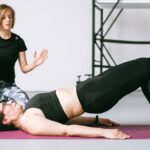
- Beginner (easiest): Lie flat on your back with your knees bent and feet flat on the floor. Lying down eliminates the effect of gravity, making it easier to feel the lift.
- Intermediate: Sit upright on a firm chair with your feet flat on the ground and your weight centered over your sitting bones.
- Advanced: Stand with your feet hip-width apart. As the NIDDK points out, practicing in lying, sitting, and standing positions prepares your muscles to react during daily activities.
Step 2: The Contraction (Squeeze and Lift)
Exhale gently, then squeeze the muscles around your anus and urethra, drawing them inward and upward toward your belly button.
Keep these points in mind:
- Do not clench your buttock cheeks together.
- Keep your inner thighs relaxed.
- Breathe steadily; never hold your breath.
- Keep your upper abdomen soft rather than aggressively pulling your stomach in.
Step 3: The Hold
For a beginner, hold the lift for 3 seconds. The contraction should feel steady, not like a violent cramp. If you feel the muscle let go before the 3 seconds are up, stop there and rest. Quality matters far more than forced duration.
Step 4: The Full Release (Crucial)
Completely let go of the contraction. You should feel an unmistakable downward drop and softening of the pelvic floor back to its resting state.
Take a full breath in and rest for at least 3 to 5 seconds before attempting another repetition. If you omit the relaxation phase, your muscles will quickly fatigue, leading to poor form and potential muscle cramping.
Building a Balanced Routine: Endurance vs. Power
A functioning pelvic floor requires two types of muscle responses: endurance (holding tone over time to keep you continent throughout the day) and speed (contracting rapidly to resist sudden pressure from a sneeze or trip).
Pelvic health guidelines from the East Lancashire Hospitals NHS Trust describe routines that balance both types of work:
1. Slow Contractions (Endurance)
- Contract the pelvic floor with moderate effort.
- Hold for 3 to 5 seconds (building up to 10 seconds over weeks as your strength improves).
- Rest completely for an equal or slightly longer period (e.g., hold 5 seconds, rest 5 seconds).
- Aim for a set of 5 to 10 repetitions, depending on your stamina.
2. Fast Contractions (Quick Squeezes)
- Contract the muscles firmly and quickly, lifting immediately.
- Release completely right away without holding.
- Repeat for 5 to 10 quick pulses, ensuring the muscle fully drops open between each pulse.
| Exercise Component | Target Muscle Quality | Starting Goal | Advanced Progression |
|---|---|---|---|
| Slow Holds | Muscle endurance and posture | 3-second hold / 3-second rest | 10-second hold / 10-second rest |
| Fast Squeezes | Reflexive closing during coughs | 5 rapid squeezes with full reset | 10 rapid, clean pulses |
| Position | Overcoming gravity | Lying on back | Standing or during movement |
Instructions vary across published clinical leaflets. While the NIDDK recommends building toward 10 to 15 repetitions per session, other NHS pelvic-health resources suggest tailored volumes based on personal baseline assessments. Do not push through fatigue just to hit an arbitrary number.
Five Common Mistakes That Undermine Progress
If you have been doing Kegels for weeks without seeing results, check whether you are making one of these common errors:
1. Bearing Down Instead of Lifting Up
The single most harmful mistake is pushing downward as if straining during a bowel movement. This increases intra-abdominal pressure and forces the pelvic organs against an unbraced pelvic floor. A clinical leaflet on exercising with pelvic organ prolapse from the Royal Berkshire NHS Foundation Trust emphasizes avoiding bearing down or breath-holding, as downward strain can worsen symptoms.
2. Over-Recruiting Compensatory Muscles
If your glutes, quadriceps, or chest muscles are tight while doing a Kegel, you are using external muscle power to compensate for an internal muscle that isn’t firing. Place a hand lightly on your buttock; if the muscle firms underneath your fingers, relax and reduce your effort until you can squeeze only the pelvic floor.
3. Skipping the Relaxation Phase
Muscles do not get stronger from constant tension; they get stronger from completing a full range of contraction and relaxation. Failing to release the pelvic floor between reps leads to a chronically short, tight, and fatigued muscle. A fatigued muscle cannot contract quickly enough to stop a leak.
4. Holding Your Breath
Holding your breath fixes the diaphragm and spikes pressure inside your abdomen, forcing you to fight your own internal pressure. Breathe naturally: exhale as you squeeze and lift, and inhale as you release.
5. Assuming More Is Always Better
Performing hundreds of repetitions a day does not speed up results. Overworking the pelvic floor can trigger pelvic floor spasms, bladder pain, tailbone discomfort, and worsened urgency. Stick to brief, controlled sets performed two to three times daily.
When Kegels May Not Be Appropriate
Pelvic health symptoms are not always caused by weak, loose muscles. Sometimes the problem is the exact opposite: hypertonic (overactive) pelvic floor muscles.
If your pelvic floor muscles are stuck in a persistent state of contraction, they become stiff, weak, and painful. Performing standard Kegels on an already overactive pelvic floor can make your symptoms significantly worse.
Kegels may be inappropriate or require specialist modification if you experience:
- Pain during or after sexual intercourse
- Chronic pelvic, tailbone, or lower abdominal pain
- Difficulty initiating urination or a feeling that your bladder never fully empties
- Chronic constipation or straining to pass bowel movements
- Ongoing pain or burning without an active infection
In these scenarios, the primary goal of physical therapy is usually down-training (lengthening, releasing, and relaxing) rather than contracting.
What Kind of Timeline Is Realistic?
Strengthening deep postural muscles takes time and neurological adaptation.
The NIHR’s summary of PFMT evidence emphasizes that clinical trials generally assess outcomes over a dedicated program of at least three months.
During the first few weeks, changes are primarily neuromuscular: your brain gets better at locating the motor units and recruiting them on demand. Noticeable improvements in muscle bulk and everyday continence typically take between 6 and 12 weeks of consistent, correct practice. If you stop the exercises altogether after seeing improvement, the muscles will gradually detrain over time, so maintaining a modest, regular routine is usually recommended.
When to Seek Professional Guidance
Self-guided pelvic floor training works well for many people, but research consistently shows that supervised pelvic floor muscle training yields higher success rates than generic, unguided exercise leaflets.
You should consult a healthcare provider or a specialized pelvic health physiotherapist if:
- You cannot feel whether you are contracting the muscles correctly.
- You notice a sensation of heaviness, bulging, or a “falling out” feeling in your vagina, which may indicate pelvic organ prolapse.
- You experience pain while trying to do the exercises.
- Your leakage worsens or fails to improve after three months of consistent practice.
A pelvic floor physical therapist can perform an internal assessment to directly evaluate resting tone, muscle strength, symmetry, and endurance. They can also use biofeedback to show you in real time whether you are lifting or bearing down, taking the guesswork out of your routine.
Frequently Asked Questions
Can men do Kegel exercises?
Yes. Men also have a pelvic floor supporting the bladder and bowel. Pelvic floor muscle training is often prescribed to men to help manage post-micturition dribble or to assist in recovery following prostate surgery.
Why shouldn’t I stop my urine flow every time I use the bathroom?
Regularly interrupting your stream can disrupt normal bladder voiding mechanisms, leave residual urine behind, and increase your risk of urinary tract infections. Use that technique only once or twice as an identification check.
How many times a day should I do pelvic floor exercises?
Most clinical guidelines recommend performing a routine of slow holds and fast contractions two to three times daily. Doing excessive reps can fatigue the muscles and lead to strain or spasms.
What should I do if Kegels cause pain?
Stop immediately and consult a healthcare professional. Pain often indicates pelvic floor hypertonicity (overly tight muscles), where standard contraction exercises are contraindicated and relaxation techniques are required.
Educational Note: This article provides general health information based on published clinical guidelines. It does not replace an individualized medical assessment or physical therapy diagnosis. If you are experiencing bladder, bowel, or pelvic pain symptoms, talk to a qualified healthcare provider to determine the right treatment plan for your body.