
The Guide to Bicep Exercises: Form, Variations, and Real Progression
Estimated reading time: 6 minutes
Key Takeaways
- Elbow Flexor Recruitment: Curls recruit the biceps brachii, brachialis, and brachioradialis; changing grip shifts mechanical advantage but does not completely isolate any single muscle.
- Technique Over Novelty: Electromyography (EMG) studies show acute activation shifts, but no single variation is proven to yield superior long-term muscle growth compared to consistent, strict form.
- Double-Progression Framework: Progress systematically by hitting the top of an 8–12 repetition range across workouts before increasing load by 2% to 10%.
- Joint Health First: Prevent elbow and wrist strain by avoiding excessive body momentum, choosing wrist-friendly implements like EZ bars or dumbbells, and maintaining neutral wrists.
Table of Contents
Building stronger or larger arms does not require an endless rotation of complicated movements. In practice, a productive routine can center on a standard, controlled supinated dumbbell curl, paired with a neutral-grip hammer curl or a comfortable barbell variation.
While fitness discussions often pit one curl variation against another in search of the “ultimate” arm builder, available electromyography (EMG) research does not demonstrate that a single variation produces superior long-term muscle growth. What drives progress is not an exotic grip angle, but consistent training, manageable loads, strict technique that keeps tension on the target muscles, and progressive overload over time.
The Muscles Behind the Curl
Every curl variation is fundamentally an elbow-flexion movement. When you bend your arm against resistance, your body calls upon a group of elbow flexors rather than a single, isolated muscle.
According to research examining elbow-flexor activation published in Sports, curling exercises recruit three primary muscles:
- Biceps Brachii: The two-headed muscle resting on the front of your upper arm. It assists in bending the elbow and plays a major role in rotating the forearm outward (supination).
- Brachialis: Situated underneath the lower portion of the biceps brachii, the brachialis is a pure elbow flexor. It works forcefully regardless of whether your palms face up, face each other, or face down.
- Brachioradialis: A prominent muscle running down the thumb side of the forearm that crosses the elbow joint, providing substantial leverage when lifting with a neutral or overhand grip.
Your wrist position changes how these flexors share the load. Rotating your palms upward (a supinated grip) places the biceps brachii in a mechanically advantageous position. Rotating your hands so the palms face inward toward each other (a neutral grip) shifts more mechanical demand toward the brachioradialis and brachialis.
However, altering your grip does not fully isolate any single muscle. Acute electrical activity measured by surface electrodes shows shifts in muscular involvement, but these laboratory readings do not translate directly to guaranteed long-term muscle growth.
5 Practical Bicep Exercises
Rather than attempting dozens of minor variations, focus on mastering a few core movements that match your joint comfort and equipment access.
1. Standing Dumbbell Curl
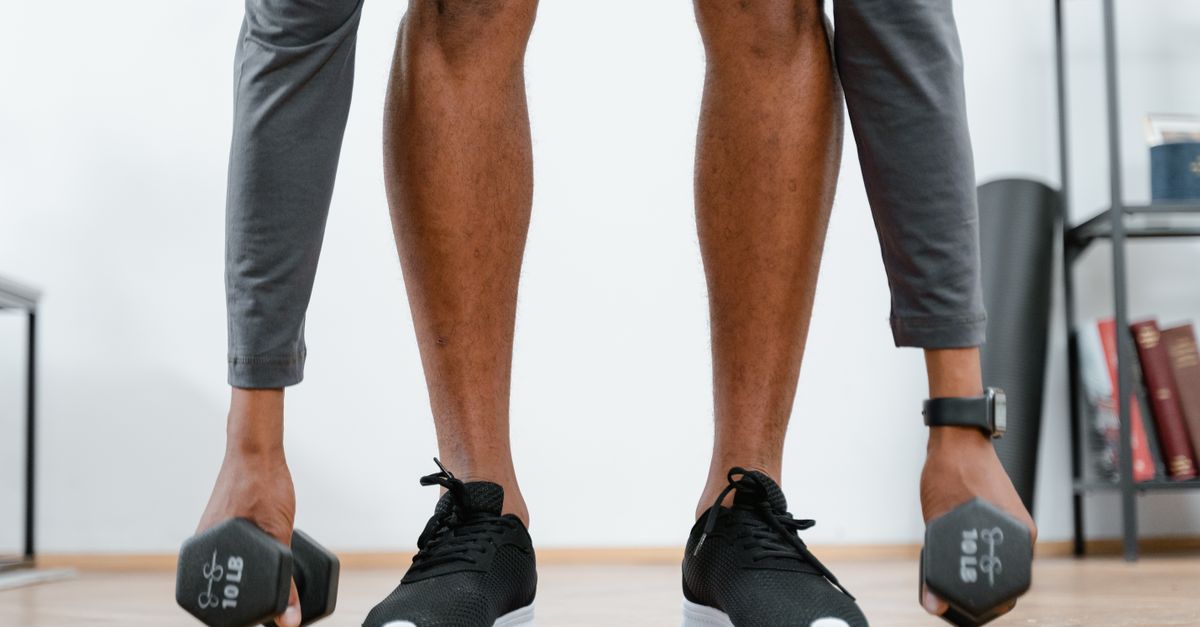
The standing dumbbell curl is the benchmark movement for the upper arm. Because dumbbells allow each arm to move independently, they prevent your stronger side from masking a weaker side. They also allow your wrists to rotate naturally into a supinated position as you lift.
- How to do it: Stand with your feet hip-width apart and dumbbells resting at your sides, palms facing inward or forward. Keeping your shoulder blades set and your upper arms close to your ribs, bend your elbows to lift the dumbbells. Rotate your palms upward as you rise. Pause briefly at the top without letting your elbows drift forward, then lower the weights under control to full extension.
- When it may not help: If you have a habit of rocking your hips or leaning back to start the movement, standing curls can quickly become a lower-back exercise rather than an arm exercise.
2. Seated Dumbbell Curl
Sitting down removes your lower body from the equation, making it significantly harder to cheat the weight upward with momentum.
- How to do it: Sit upright on a bench with back support, holding a dumbbell in each hand. Keep your back flat against the pad. Curl the weights upward while keeping your upper arms stationary against your sides.
- Form essentials: As detailed in the American Council on Exercise (ACE) seated curl library, you should keep your wrists aligned with your forearms throughout the entire repetition. Avoid shrugging your shoulders upward or letting your elbows migrate forward to create false leverage.
3. Hammer Curl
The hammer curl uses a neutral grip where your palms face each other throughout the lift.
- How to do it: Hold dumbbells at your sides with your palms facing your torso. Keeping your palms facing each other, bend your elbows and curl the weights until your forearms are just past parallel with the floor. Lower slowly to a full stretch.
- Why use it: This variation is an excellent choice if you experience wrist or elbow discomfort from fully supinated curls. While it increases the involvement of the brachioradialis and brachialis, it does not completely isolate them from the biceps brachii.
4. EZ-Bar or Barbell Curl
Bilateral bar curls allow you to train both arms simultaneously, making it straightforward to track small loading increments over time.
- Bar choice matters: A straight barbell locks the wrists into full supination, which can cause strain on the inner elbows or wrists for some lifters. An EZ-curl bar features angled grips that place the hands in a semi-supinated position, offering a joint-friendly middle ground.
- Research context: A study published in the Journal of Life and Environmental Sciences evaluated 12 healthy participants performing curls with different implements. The researchers found that the EZ bar elicited higher biceps brachii and brachioradialis EMG activity than dumbbells. However, because this study examined only acute electrical activity in a small group, it does not prove that an EZ bar will build more muscle than dumbbells over months or years. Pick the bar that feels most natural on your wrists and elbows.
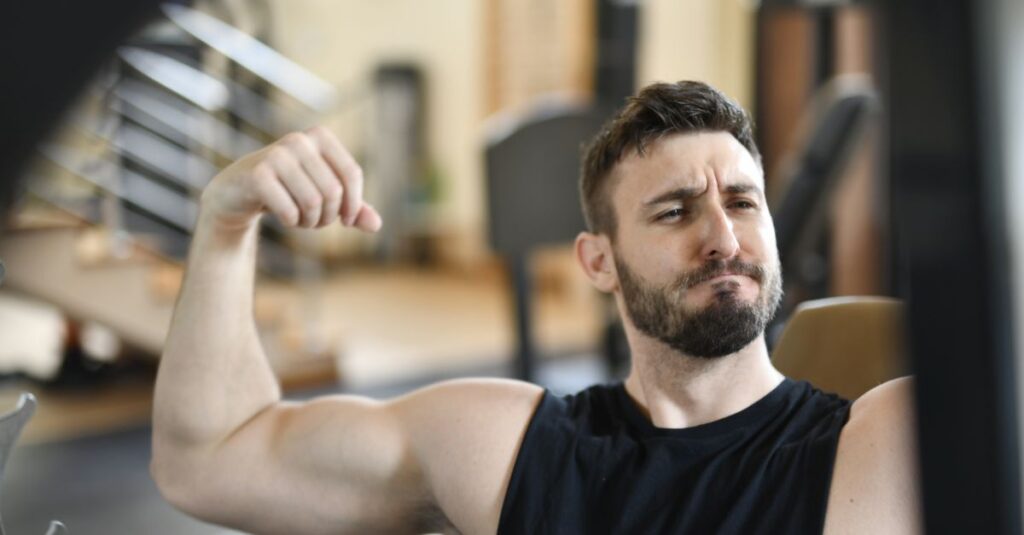
5. Seated Machine Curl
Machines provide guided movement paths and steady mechanical tension through the entire range of motion, which is helpful if free weights challenge your joint stability.
- How to do it: Adjust the seat height so that when your arms rest on the pad, your elbow joints align directly with the machine’s axis of rotation.
- Form essentials: According to ACE machine curl guidelines, keeping your elbows aligned with the machine’s pivot point protects the joint and ensures proper leverage. Maintain neutral wrists without bending them backward, keep your feet firmly on the floor, and avoid rocking your torso away from the chest pad during the lift.
Technique: Cues for Controlled Lifting
Poor technique on bicep exercises rarely causes catastrophic injury, but it consistently robs your arms of the tension needed to grow.
| Phase | What to Do | What to Avoid |
|---|---|---|
| Setup | Stand or sit tall, set your shoulder blades gently down and back, and brace your core. | Slouching forward, rounding shoulders, or shifting weight onto toes. |
| Lifting (Concentric) | Flex the elbows while pinning your upper arms close to your torso. Move only at the elbow joint. | Leaning backward, swinging the hips, or flaring elbows outward. |
| Top Position | Squeeze the biceps with wrists straight and neutral with the forearm. | Bending wrists backward or curling them violently inward to finish the lift. |
| Lowering (Eccentric) | Lower the weight under control for 2 to 3 seconds through a comfortable, complete range of motion. | Dropping the weights freely or letting the elbows violently snap straight. |
Practical Coaching Cues
- Treat your upper arm as a pillar: Your humerus (upper arm bone) should stay perpendicular to the floor for most of the lift. If your elbows drift forward toward your chest, your front deltoids take over the tension.
- Do not bend your wrists: Keep your knuckles in line with your forearms. Bending your wrists inward at the top of the curl simply overworks the forearm flexors and shortens the movement before the biceps reach full contraction.
- Respect the bottom of the movement: Extend your arms until they are straight but not hyperextended or forcefully locked out. Cutting the bottom third of the repetition reduces the muscle’s working range of motion.
How to Program Bicep Work and Progress Over Time
Because the biceps flex the elbow during vertical and horizontal pulling movements (like pull-ups, lat pulldowns, and rows), they already receive a baseline stimulus during broader upper-body training. Direct bicep exercises function as targeted assistance work to ensure the elbow flexors receive sufficient volume.
Sample Weekly Bicep Layout (Example Template)
------------------------------------------------------
Exercise 1: Standing or Seated Dumbbell Curl
Sets: 3 sets of 8–10 repetitions
Rest: 90–120 seconds between sets

Exercise 2: Hammer Curl (Dumbbell or Cable)
Sets: 2–3 sets of 10–12 repetitions
Rest: 60–90 seconds between sets
------------------------------------------------------
Note: This layout is an illustrative example, not a universal rule. Adjust volume and frequency based on your recovery and overall weekly pulling work.
Load and Progression Principles
General resistance training models from the American College of Sports Medicine (ACSM) recommend an 8–12 repetition-maximum (RM) load range for novice trainees, with broader loading ranges utilized as trainees become more advanced.
To progress safely, use a double-progression system:
- Select a weight with which you can complete the lower end of your target rep range (for example, 8 reps) with sound form.
- Keep using that same weight across workouts until you can perform the upper end of the range (for example, 12 reps) on all sets.
- Follow the ACSM guidance: when you can exceed your target repetition count by 1 to 2 reps across two consecutive training sessions, increase the load by 2% to 10%.
- After increasing the weight, your repetitions will drop back toward the lower end of the range. Build them back up gradually.
Managing Rest Periods
The ACSM model suggests resting at least 2 to 3 minutes between sets for core, multi-joint exercises, while noting that shorter rest intervals are typically used for assistance exercises. Although curls are single-joint assistance movements, resting 60 to 90 seconds generally allows your breathing and local fatigue to settle so you can perform the next set with stable technique.
What the Research Does—and Doesn’t—Show
Fitness culture frequently misinterprets small biomechanical studies to make definitive claims about routine design. Keeping these claims in perspective will save you time and frustration.
Electromyography (EMG) vs. Long-Term Muscle Growth
EMG measures the acute electrical currents generated by muscle fibers during a movement. While an EMG study can confirm that a curl recruits the biceps brachii, higher activation in a single laboratory session does not prove that an exercise will produce more muscle growth over weeks or months.
Many published studies on curl mechanics rely on very small participant groups. For instance, the previously cited EZ-bar investigation tested 12 individuals. Another study examining barbell curls published in Sports evaluated only 10 competitive bodybuilders during short sets. These small, specialized samples provide helpful snapshots of muscle activation under specific conditions, but they cannot be treated as sweeping proof for general programming.
Grip Width and “Targeting” Different Heads
A common bodybuilding belief is that using an ultra-wide grip on a barbell targets the short (inner) head of the biceps, while a narrow grip isolates the long (outer) head.
While an educational article by ACE on biceps training notes that variations in grip and wrist position alter how mechanical force is distributed across the arm, available clinical research has not established that specific grip widths predictably cause distinct, long-term hypertrophy in one head over the other.
Varying your grip width can be useful to relieve wrist strain or accommodate personal anatomy, but it should not be treated as a guaranteed method for custom-sculpting muscle shape.
Common Mistakes and Joint Safety
Because curls place stress on the distal biceps tendon, forearms, and wrists, avoiding technical errors is essential for keeping your joints healthy.
- Using the hips to heave the weight: Swinging your torso forward and backward shifts mechanical tension off your arms and places dynamic shearing stress on the lower back. The ACE seated curl analysis specifically highlights torso movement as a primary flaw that negates the benefit of the exercise.
- Loading beyond capacity: If you cannot reach full elbow flexion without hiking your shoulder blades or throwing your elbows outward, the load is too heavy. Drop the weight to protect your tendons.
- Forcing an uncomfortable wrist angle: Straight barbells demand near-complete forearm supination. If holding a straight bar causes an ache in your wrists or the inside of your elbows, switch to an EZ bar or dumbbells immediately.
- Training through tendon pain: A burning muscular pump during a set is normal; sharp, radiating, or worsening pain near the elbow crease or inside of the joint is not.
Educational note: If you experience sharp, persistent pain, swelling, or reduced joint mobility in your elbow or shoulder, stop the aggravating movement. Seek an evaluation from a qualified physical therapist or physician for proper diagnosis and care.
Frequently Asked Questions
Are hammer curls better than regular curls?
Neither is universally better; they perform slightly different jobs. Supinated curls place the biceps brachii in an optimal position for force production. Hammer curls utilize a neutral grip that increases the contribution of the brachioradialis and brachialis while providing a more comfortable wrist angle. Incorporating both offers balanced development and protects your joints from repetitive strain.
How many bicep exercises should I do per workout?
For most trainees, 1 to 2 dedicated bicep exercises per session is sufficient, especially if the workout already includes pulling exercises such as rows, pull-ups, or pulldowns. Performing more than two curl variations in a single workout often leads to diminishing returns and excessive fatigue.
Can I build my biceps effectively with just dumbbells?
Yes. Dumbbells are among the most versatile tools for training the arms. They allow your wrists to rotate naturally, enable independent work for each arm to prevent muscular imbalances, and accommodate both supinated curls and hammer curls.
Next Steps
To refine your arm training, audit your current routine:
- Pick two core movements: Select one supinated variation (such as a seated dumbbell curl or EZ-bar curl) and one neutral-grip variation (such as a dumbbell hammer curl).
- Standardize your form: Film a working set from the side. Verify that your torso remains still, your elbows stay pinned near your sides, and you lower each repetition under control for a full 2 seconds.
- Apply the 2–10% rule: Focus on reaching the top of your target repetition range across two consecutive workouts before adding load. Let gradual, repeatable progression drive your results.