
A Practical Guide to Back Exercises for Strength, Stability, and Mobility
Estimated Reading Time: 6 minutes
Key Takeaways:
- A balanced routine focuses on three primary movement patterns: pulling, hip hinging, and trunk stability.
- Clinical guidelines consistently recommend active movement over passive bed rest for back discomfort.
- Exercise progression differs sharply depending on whether your goal is general muscle development or symptom management.
- Form quality and gradual adaptation take priority over lifting heavy weights or pushing through sharp pain.
Table of Contents
- Core Back Movement Triad
- Understanding Your Back: Upper, Lower, and Posterior Chain
- 5 Essential Back Exercises and How to Perform Them
- Programming: How to Structure Sets, Reps, and Rest
- The Reality of Back Pain Guidelines
- Why Bed Rest Is the Wrong Approach
- 4 Form Mistakes That Undermine Back Training
- Frequently Asked Questions
- When to Seek Medical Attention
- Your Next Step
Building a reliable routine of back exercises depends entirely on what you want to achieve. Someone looking to build muscle in their mid-back needs a different approach than someone working through morning stiffness or recovering functional movement after an episode of discomfort.
At a practical level, a well-rounded back program does not require an endless list of movements or complex machinery. For most people, combining three fundamental movement patterns creates a balanced foundation: a pulling exercise, a hip hinge, and a trunk-stability exercise.
Core Back Movement Triad
       Core Back Movement Triad
 ┌─────────────────┐    ┌─────────────────┐
 │ Pulling (Upper) │    │ Hinge (Lower)   │
 │ Rows, Pull-downs│    │ RDLs, Bridges   │
 └────────┬────────┘    └────────┬────────┘
          │                      │
          └───────────┬──────────┘
                      ▼
         ┌─────────────────────────┐
         │ Trunk Stability (Spine) │
         │ Bird Dog, Extensions    │
         └─────────────────────────┘
When structuring these movements, context matters. Lifting weights to build tissue tolerance follows different principles than exercising to ease discomfort. If you are dealing with spinal irritation, NHS Inform guidance on back pain points out that no single exercise suits everyone. Their advice emphasizes starting gradually and immediately stopping any movement that worsens your symptoms or introduces new pain.
Understanding how different sections of your back function will help you choose exercises suited to your body, your goals, and your training history.
Understanding Your Back: Upper, Lower, and Posterior Chain
The term “back” covers a large, interconnected network of muscle groups and spinal structures. Grouping them by how they move helps you select the right exercise for the right job:
- The Upper and Mid-Back: The latissimus dorsi, rhomboids, and middle-to-lower trapezius control pulling mechanics and shoulder-blade movement. Strengthening these areas supports your ability to lift, row, and carry objects against gravity.
- The Posterior Chain and Hips: The glutes, hamstrings, and erector spinae (the muscular columns flanking your spine) work together to extend the hips and steady your trunk. The hip hinge is the primary way to train this system.
- The Deep Trunk Stabilizers: Smaller muscles along the spine and abdomen regulate micro-movements between spinal segments. Movements like the bird dog build coordinated control through these tissues without loading the spine under heavy resistance.
It is common to hear that specific back exercises will “fix” bad posture or guarantee injury prevention. Anatomical research does not support such broad claims. Pain is complex and influenced by stress, fatigue, movement history, and personal anatomy. While strength exercises build tissue tolerance and movement options, they do not bulletproof the body or target a single structural defect.
5 Essential Back Exercises and How to Perform Them
You do not need to do every back exercise available. Selecting two or three high-yield movements and performing them with controlled technique will produce the best results.
1. The Horizontal Row (Resistance Band, Cable, or Dumbbell)
The row is the foundation of upper-back training. It trains the lats, rhomboids, and rear deltoids while challenging your mid-back to stay steady under tension.
Dumbbell Row Setup:
Flat back ──> Elbow drives back ──> Torso remains still
              [ Hips hinged at 45° ]
- How to do it: If using a dumbbell, hinge at your hips, rest one hand on a sturdy bench, and let the weight hang directly below your shoulder with a neutral spine. Pull the weight toward your lower ribcage by driving your elbow back. Lower the weight smoothly back to the starting point.
- Home alternative: Loop a resistance band around a secure anchor point (or your feet while seated). Sit upright with legs extended and pull the handles toward your navel, keeping your shoulders depressed.
- Key cue: Pull your elbow back toward your hip rather than yanking the weight up to your chest.
- Common mistake: Shrugging the shoulder toward the ear or twisting the entire torso to create momentum. If your chest rotates open, the load is too heavy.
2. The Hip Hinge (Bodyweight or Romanian Deadlift)
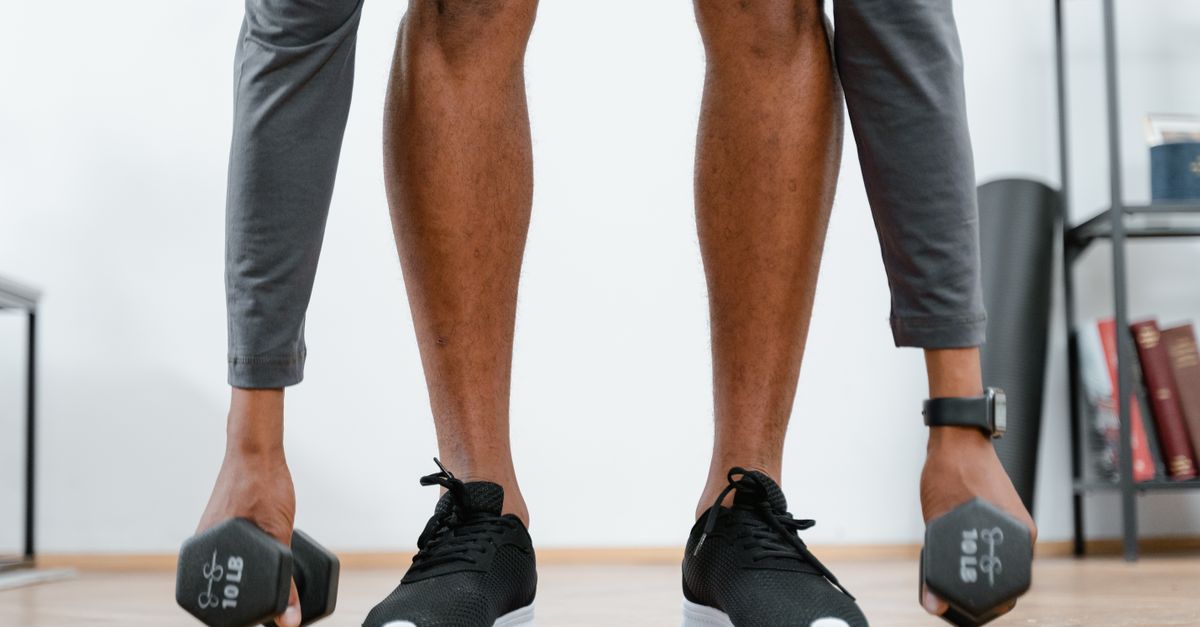
The hip hinge is the movement pattern used to pick objects up safely from the floor. It distributes physical stress across the hips and hamstrings, protecting the lower back from taking on the entire workload.
Hip Hinge Mechanics:
 Knees Soft ──> Hips Push Backwards ──> Torso Tilts Forward
 [ Weight stays close to the shins; back stays flat ]
- How to do it: Stand with your feet hip-width apart and knees soft (slightly bent, but not locked). Without bending your knees any further, push your hips directly behind you as if trying to close a car door with your glutes. Let your torso hinge forward naturally until you feel tension in your hamstrings. Squeeze your glutes to drive your hips forward and return to a standing position.
- Beginner option: Stand with your heels six inches away from a wall and practice pushing your hips back until your glutes touch the wall.
- Key cue: Keep any weight (dumbbells, barbell) skimming against your shins. The further the load drifts away from your body, the higher the leverage placed on the lower lumbar spine.
- Common mistake: Turning the hinge into a squat by bending the knees deeply and dropping the hips straight down.
3. The Bird Dog
The bird dog trains coordinated trunk control. It teaches the nervous system to stabilize the spine while the limbs are moving, making it a staple in both rehabilitation and general fitness.
- How to do it: Begin on hands and knees with your wrists beneath your shoulders and knees beneath your hips. Slowly extend your right arm forward and your left leg straight back until both are parallel to the floor. Hold for two seconds, return under control, and alternate sides. Calderdale and Huddersfield NHS Trust patient guidance notes this alternating arm-and-leg pattern as an effective way to engage back support muscles while keeping the spine supported.
- Beginner option: If lifting an arm and a leg at the same time causes your hips to rock or your back to sag, lift only one limb at a time (just the right leg, then the left, then individual arms).
- Key cue: Imagine balancing a cup of water on your lower back; your hips should remain completely level throughout the movement.
- Common mistake: Kicking the back leg too high, which arches the lower back and shifts work away from the stabilizing trunk muscles.
4. Supported Back Extension
This movement gently mobilizes the lumbar spine into extension, which is useful for people who spend long hours sitting in a flexed posture.
- How to do it: Lie flat on your stomach on an exercise mat. Place your forearms flat on the floor beside your shoulders. Press gently through your forearms to raise your chest off the floor while keeping your pelvis and hips anchored. Hold for two to three seconds, breathe naturally, and lower back down.
- Progression: Guy’s and St Thomas’ NHS guidance for low back pain lists supported extensions among its low-back exercises, advising that you only progress from your forearms to pressing up with your hands if your back feels comfortable doing so.
- Key cue: Keep your glutes relaxed and let the extension occur smoothly through your spine rather than pinching at a single pivot point.
- Common mistake: Jamming the neck back or forcing through sharp lower-back pinching. Only move within a comfortable, pain-free range.
5. The Glute Bridge or Bodyweight Squat
While often categorized as leg exercises, squats and bridges play a critical role in how your back manages load. Strong glutes and thighs absorb forces that would otherwise pass through the lumbar spine.
- How to do the bridge: Lie on your back with knees bent and feet flat on the floor. Press your heels down, squeeze your glutes, and lift your hips until your thighs and torso form a straight line. Lower back down slowly.
- Bodyweight squat alternative: If you prefer standing movement, Guy’s and St Thomas’ NHS exercises also include squats to build lower-body capacity alongside trunk conditioning.
- Key cue: In the bridge, push through your heels and avoid over-arching your lower back at the top.
Programming: How to Structure Sets, Reps, and Rest
A common source of frustration with back workouts is not knowing how much work to do. The right training volume depends on whether you are training for muscular development or working through minor discomfort.
| Training Goal | Target Repetitions | Sets | Frequency | Rest Between Sets |
|---|---|---|---|---|
| General Strength / Novice | 8–12 reps | 1–3 sets | 2–3 days per week | 1–2 minutes (longer for heavy sets) |
| Symptom Management / Rehab | 2–15 reps (gradual) | 1–2 sets | Daily or every other day | As needed to maintain control |
For General Strength and Muscle Development
If your spine is healthy and your goal is to build strength, the American College of Sports Medicine (ACSM) position stand on resistance training offers clear parameters:
- Repetition ranges: Novice and intermediate lifters benefit from loads that allow 8 to 12 repetitions per set with good technique.
- Frequency: Training major muscle groups 2 to 3 days per week allows sufficient stimulus for muscle growth while giving tissues time to recover.
- Progression: When you can comfortably complete one or two extra repetitions beyond your target on a given exercise, the ACSM suggests increasing the load by approximately 2% to 10%.
- Rest periods: Take enough rest to maintain strict form on every set. While the ACSM highlights rest periods of at least 3 minutes for advanced athletes working with heavy maximum loads, novice and intermediate sets typically require only 1 to 2 minutes between lighter, moderate-rep sets.
For Managing Mild Back Discomfort
When you are dealing with everyday stiffness or recovering from an episode of back fatigue, standard gym progression rules do not apply.
According to NHS Inform back pain guidelines, people starting gentle rehabilitation exercises should begin with as few as 2 to 3 repetitions per movement. From there, you can slowly work your way up to a maximum of 2 sets of 15 repetitions over several days or weeks, depending on how your body responds.
The primary rule here is simple: if an exercise provokes new pain or worsens existing symptoms, stop doing it.
The Reality of Back Pain Guidelines
If you read different fitness blogs, you will find wildly conflicting advice on what constitutes the “ideal” back routine. Some sources insist that core stability is the only answer, while others argue that heavy barbell training is essential.
The broader scientific literature paints a more flexible picture. A 2024 systematic review of clinical guidelines for low-back pain found that every evaluated clinical guideline recommended supervised exercise therapy, and nearly all urged patients to stay active.
However, the review highlighted a major gap: most guidelines do not prescribe a single “best” exercise type, intensity, frequency, or duration.
What Guidelines Agree On:
 ✔ Exercise and movement help
 ✔ Staying active beats bed rest

What Guidelines Acknowledge:
 ✖ There is no single "best" exercise
 ✖ Exact reps and sets vary by individual
What matters most is picking movements you can perform comfortably, sustaining them consistently, and gradually increasing your capacity over time.
Why Bed Rest Is the Wrong Approach
When your back feels tight or achy, resting in bed until it disappears is a tempting reaction. Historically, this was standard medical advice. Today, the clinical consensus has reversed.
An orthopedic patient information booklet from University Hospitals Dorset NHS explains that bed rest is no longer advised for ordinary back pain. Lying still for extended periods causes the muscles supporting your spine to become stiff and weak, which can prolong your discomfort. By contrast, gradual, gentle exercise helps preserve your back’s strength, flexibility, and general fitness.
Unless a medical professional has specifically instructed you to remain off your feet for a distinct clinical condition, light walking and gentle mobility drills are far more effective ways to encourage blood flow and recovery.
4 Form Mistakes That Undermine Back Training
Because you cannot directly watch your back muscles work in a mirror, form errors are common. Here are four technical mistakes to watch for:
- Using Momentum on Rows: Throwing your torso backward to yank a weight toward your body uses momentum from your hips instead of your upper-back muscles. Keep your torso completely steady; only your arms and shoulder blades should move.
- Hyperextending the Lumbar Spine: When doing bird dogs, back extensions, or even pull-downs, people often arch their lower backs excessively. The goal is to extend through your hips and mid-back (thoracic spine) while keeping your lower abdomen lightly braced.
- Treating Pain as Something to “Push Through”: Muscle burning from fatigue is normal; sharp, stabbing, or radiating pain is not. Forcing your spine into ranges that produce sharp discomfort irritates surrounding nerves and leads to protective muscle spasms.
- Increasing Weight Before Movement Quality: Adding resistance to a poorly executed hip hinge or row simply multiplies the mechanical strain on passive tissues. Earn the right to lift heavier loads by mastering the movement pattern with bodyweight or light resistance first.
Frequently Asked Questions
What are the best back exercises to do at home?
Bodyweight and resistance-band variations work well for home workouts. A combination of resistance-band rows (for the upper back), bodyweight hip hinges or bridges (for the hips and hamstrings), and bird dogs (for core stability) covers all the major movement patterns without requiring barbells or gym machines.
How often should I train my back?
For strength and muscle building, training the back 2 to 3 days per week provides the best balance between stimulus and recovery. If you are doing light, floor-based mobility movements (such as supported back extensions or gentle bird dogs) to ease stiffness, you can perform them daily or every other day, provided they feel comfortable and cause no irritation.
Which exercises directly strengthen the lower back?
The erector spinae muscles of the lower back are trained through hip hinges (such as Romanian deadlifts), back extensions, and bird dogs. Movements that train the glutes and hamstrings also directly assist the lower back by building a stable base for the pelvis.
Can I do back exercises if my back currently hurts?
Yes, but the type and intensity of movement must change. Gentle walking and light mobility exercises are generally encouraged, while heavy lifting and movements that provoke sharp pain should be paused. Always follow the principle outlined by NHS Inform: stop any movement that worsens symptoms or triggers new discomfort.
When to Seek Medical Attention
While most back aches settle with time and gentle movement, certain signs require professional clinical assessment. Speak to a doctor or qualified physiotherapist if your back pain:
- Radiates down one or both legs below the knee
- Causes numbness, tingling, or weakness in your legs or feet
- Worsens progressively over several weeks despite rest and gentle movement
- Is accompanied by unexplained fever, weight loss, or difficulty controlling your bowel or bladder (the latter requires immediate emergency care)
Your Next Step
Do not try to overhaul your entire physical routine overnight. Pick two exercises from the list above—such as the horizontal row and the bird dog—and try performing a single set of each with light resistance or bodyweight. Pay close attention to how your body responds during and after the movement. Once your form feels stable and comfortable across several sessions, you can gradually add resistance or introduce a third movement pattern to your week.
Educational Note: This article provides general exercise and fitness information and is not a substitute for individual medical advice or diagnosis. Always consult a qualified healthcare provider before starting a new exercise program if you have pre-existing spinal conditions or persistent pain.