
How to Build an Effective Lower Body Workout
Estimated Reading Time: 6 minutes
Key Takeaways
- A comprehensive lower body workout focuses on four primary movement patterns: knee-dominant, hip hinge, single-leg, and ankle extension.
- Spot reduction is a persistent myth; resistance training builds muscle tissue, while total energy balance governs overall body fat reduction.
- Training major lower body muscles at least two days per week satisfies federal health guidelines and drives both strength and hypertrophy.
- Consistent progression through movement quality, repetitions, resistance, and sets yields superior adaptations compared to chasing extreme muscle soreness.
Table of Contents
If you want stronger legs, firmer footing, or easier movement on stairs, you do not need an endless list of complex exercises. A well-designed lower body workout comes down to four fundamental movement patterns: a knee-dominant push (like a squat), a hip hinge (like a deadlift or bridge), a single-leg movement, and calf work.
In everyday training, “lower body” refers to the quadriceps on the front of the thighs, the hamstrings along the back, the glutes around the hips, and the calves on the lower legs. While training these muscles builds strength and stimulates muscle growth, working them does not burn fat exclusively from your hips or thighs. Spot reduction is a persistent myth; resistance training alters muscle tissue, while overall energy balance drives fat loss across your body.
Below is a practical blueprint for structuring your training, adjusting the movements to fit your mobility, and applying evidence-backed principles for sets, repetitions, and progression.
The Four Movement Patterns You Need
Balancing knee-dominant exercises with hip-dominant movements protects joint health and ensures you develop both the front and back of your legs evenly.
| Movement Pattern | Target Muscles | Sample Exercises |
|---|---|---|
| Knee-Dominant (Squat) | Quadriceps, Glutes | Bodyweight or Goblet Squat, Chair Squat |
| Hip Hinge | Hamstrings, Glutes, Lower Back | Romanian Deadlift (RDL), Glute Bridge |
| Single-Leg (Unilateral) | Quads, Glutes, Calves, Hip Stabilizers | Split Squat, Step-Up, Supported Lunge |
| Ankle Extension | Gastrocnemius, Soleus | Standing Calf Raise, Seated Calf Raise |
1. The Knee-Dominant Pattern (The Squat)
Squats primarily target the quadriceps on the front of your thighs along with your glutes.
- Technique: Stand with your feet roughly shoulder-width apart, toes turned slightly outward (typically 10 to 20 degrees). Keep your chest upright and brace your midsection. Bend your knees and hips simultaneously, sitting down as if reaching for a low chair. Lower yourself until your thighs are roughly parallel to the floor, or as deep as your hips and ankles allow without rounding your lower back or letting your knees cave inward. Drive your feet through the floor to return to standing.
- Easier option: Sit-to-stand (chair squat). Place a sturdy chair behind you. Sit down under control, pause lightly on the seat without collapsing, and stand back up without using your hands to push off your knees.
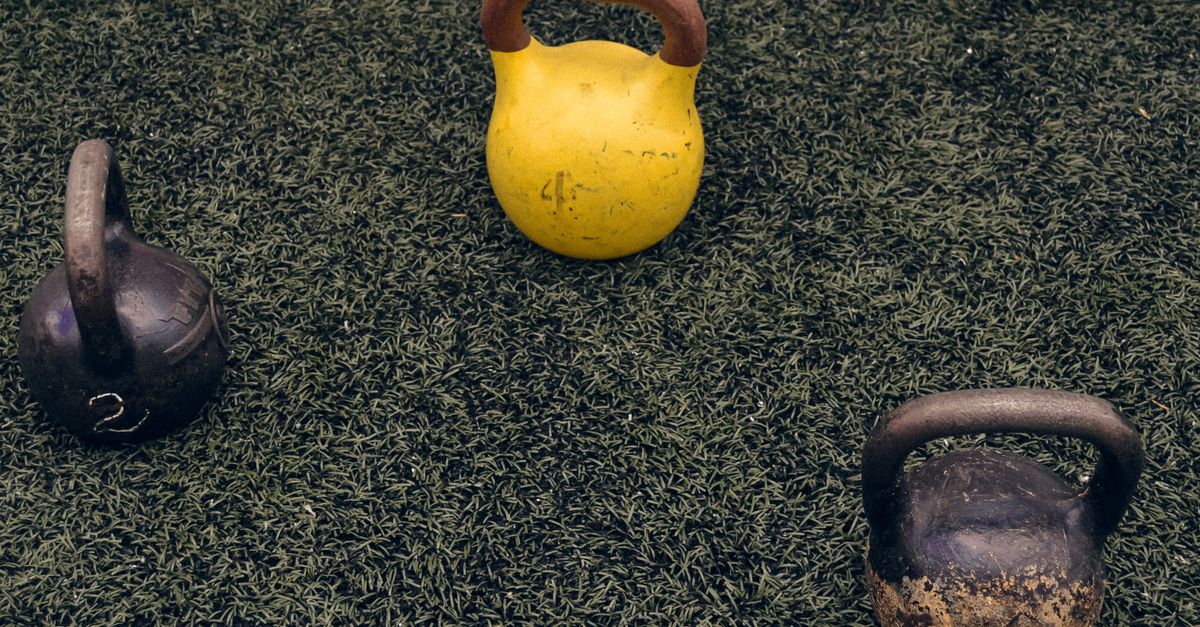
- Harder option: Goblet squat. Hold a dumbbell or kettlebell vertically against your chest with both hands under the horn or weight head, maintaining that load while preserving a full, upright range of motion.
2. The Hip Hinge (The Deadlift or Bridge)
The hip hinge shifts the workload to your posterior chain—specifically the hamstrings and glutes—while placing minimal shear stress on the knees.
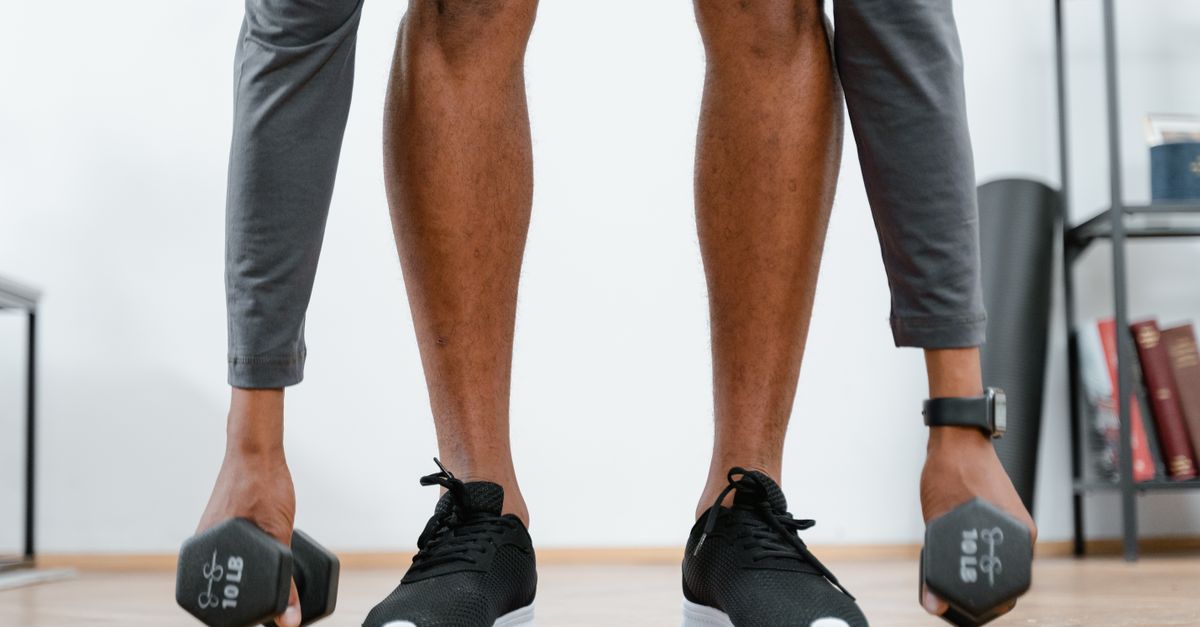
- Technique (Romanian Deadlift): Stand tall with feet hip-width apart, holding light dumbbells in front of your thighs. Keep a soft, slight bend in your knees, but do not bend them further as you move. Push your hips straight back toward the wall behind you while keeping your spine neutral and the weights close to your shins. Stop when your hamstrings feel tight (usually just below the knee) and before your lower back rounds. Squeeze your glutes to drive your hips forward to the starting position.
- Easier option: Floor glute bridge. Lie on your back with your knees bent and feet flat on the floor, about hip-width apart. Drive through your heels to raise your hips until your thighs and torso form a straight line. Squeeze your glutes at the top for one second, then lower slowly. This removes balance and spinal-load concerns.
- Harder option: Single-leg glute bridge or heavier dumbbell Romanian deadlifts with slow eccentric (lowering) tempos.
3. The Single-Leg Pattern (Unilateral Work)
Bilateral movements (standing on two feet) allow your stronger side to mask weaknesses on your weaker side. Single-leg work irons out these asymmetries, challenges your balance, and recruits deep hip-stabilizing muscles like the gluteus medius.
- Technique (Split Squat): Take a comfortable step forward, holding a staggered stance with both feet pointing ahead. Keep your torso tall and drop your back knee straight down toward the floor until it hovers an inch above it. Your front shin should stay relatively vertical. Push through the middle and heel of your front foot to rise back up. Complete all repetitions on one side before switching.
- Easier option: Supported split squat or low step-up. Place one hand on a wall, a sturdy railing, or the back of a chair for balance. Alternatively, step onto a stable platform that is only four to six inches high.
- Harder option: Deficit reverse lunges or holding a dumbbell in each hand during split squats.
4. Ankle Extension (The Calf Raise)
The calf muscles—the gastrocnemius and soleus—support your ankles during walking, running, and jumping, while protecting Achilles tendon function.
- Technique: Stand on flat ground or with the balls of your feet on the edge of a step. Press down through the balls of your big toes to raise your heels as high as possible. Pause at the top for a moment, then lower your heels under control until you feel a gentle stretch in the calves.
- Easier option: Two-legged standing calf raise on flat ground while resting both hands on a wall for balance.
- Harder option: Single-leg calf raise on a raised step to increase the active range of motion.
Repetitions, Sets, and Training Frequency
Building an effective program requires understanding how much work your legs actually need. You do not need to spend two hours in the gym to see noticeable adaptations.
What the Guidelines Recommend
According to the U.S. Physical Activity Guidelines, adults should perform muscle-strengthening activities that work all major muscle groups—specifically including the legs and hips—at least two days per week.
For general strength improvements, the guidelines note that performing just one set of 8 to 12 repetitions can lead to meaningful gains, though completing two or three sets may be more effective. The key factor is effort: a set is considered challenging when completing another repetition with sound form would be difficult. You do not need to train to total muscular failure where the weight pins you, but stopping when you have one or two solid repetitions left in reserve ensures the muscle receives an adequate stimulus.
Strength Versus Muscle Growth: What the Research Says
If your goal goes beyond basic strength maintenance toward muscle hypertrophy (growth) or maximal strength, your training parameters can shift:
- Muscle Hypertrophy: An ACSM position stand on resistance training associates muscle growth with higher weekly training volume, typically around 10 or more sets per muscle group per week. However, this is an observation from athletic and resistance-trained populations, not a mandatory starting point for beginners. Starting with 4 to 6 total weekly sets per muscle group often produces notable gains for novices while avoiding severe soreness.
- Load and Weight Selection: A systematic review and network meta-analysis on resistance training loads found that muscle hypertrophy can occur across a broad range of loads—meaning both lighter weights lifted for higher repetitions and heavier weights lifted for fewer repetitions can trigger muscle growth, provided the sets are taken close to fatigue. However, heavier loads generally produce superior gains in maximal strength. This evidence primarily reflects untrained and recreationally trained individuals, meaning individual responses vary based on your training history.
In short: if you want to lift heavier objects, you will eventually need to train with heavier loads and fewer repetitions. If you want larger muscles or better muscular endurance, a wider variety of rep ranges (from 8 to 20 repetitions) can work well.
A Practical Lower-Body Routine
This sample template is designed for home or gym use with minimal equipment. It can be completed in roughly 30 to 40 minutes.
| Exercise | Movement Pattern | Beginner Sets & Reps | Intermediate Sets & Reps | Rest |
|---|---|---|---|---|
| Goblet Squat (or Chair Squat) | Knee-Dominant | 2 sets of 8–10 reps | 3 sets of 8–12 reps | 60–90 sec |
| Dumbbell RDL (or Glute Bridge) | Hip Hinge | 2 sets of 10–12 reps | 3 sets of 8–10 reps | 60–90 sec |
| Supported Split Squat (or Step-Up) | Single-Leg | 1–2 sets of 8 reps/leg | 3 sets of 10 reps/leg | 60 sec |
| Standing Calf Raise | Calf Extension | 2 sets of 12–15 reps | 3 sets of 15 reps | 45–60 sec |
How Much Rest Do You Need?
Official health guidelines do not mandate a single, strict rest interval. As a general rule, rest long enough that your cardiovascular breathing settles and you can perform the next set with crisp, uncompromised technique. For multi-joint movements like squats and deadlifts, this usually means 60 to 90 seconds (and up to two minutes if the weights are heavy). For isolation exercises like calf raises, 45 to 60 seconds is often sufficient.
How Often to Train
You can perform this session two days per week on nonconsecutive days (for example, Tuesday and Friday). Federal guidance supports training major muscle groups on two or more days each week, but it does not mandate running an identical routine every session. You could perform this exact template twice, or swap the variations on your second day—doing step-ups instead of split squats, or glute bridges instead of Romanian deadlifts.
How to Progress (Progressive Overload)
Your body adapts to stress by building muscle tissue and reinforcing neural pathways. Once an exercise feels manageable, you must apply progressive overload to keep seeing adaptations.
Rather than overhauling your routine every two weeks, adjust one variable at a time:
- Improve Movement Quality: Before adding weight, ensure you can hit full depth with a controlled tempo (e.g., lowering down for two seconds, pausing for one second, and rising under control).
- Add Repetitions: If your target is 8 to 12 repetitions and you can complete 8, stay at that weight until you can complete 12 clean reps on all sets.
- Add Resistance: Once you reach the top of your repetition target, increase the weight slightly (e.g., moving from a 15-pound dumbbell to a 20-pound dumbbell on your goblet squats) and drop back to the lower end of your repetition target (8 reps).
- Increase Sets: If you start with two sets per exercise, gradually move to three sets after three to four weeks of consistent training, provided your joints feel good and you recover well between sessions.
Common Mistakes to Avoid
Even with simple movements, small training errors can derail your progress or cause unnecessary joint irritation.
- Chasing Soreness as a Badge of Honor: Delayed-onset muscle soreness (DOMS) simply means your body encountered a novel stimulus. It is not an accurate indicator of muscle growth or a productive workout. Severe soreness that impairs your ability to sit in a chair or walk normally for four days is a sign that you used too much volume or intensity too soon.
- Copying Advanced Bodybuilding Splits: Novices frequently attempt routines containing 15 to 20 sets of quad-specific exercises in a single afternoon. While high volumes (10+ weekly sets per muscle) correlate with muscle growth in research literature, beginners do not need this volume right away. Doing too much too early leads to excessive fatigue and degraded mechanics.
- Letting Your Form Degrade Under Fatigue: A set should feel difficult toward the end, but the final repetition should look nearly identical to the first. If your knees buckle inward on a squat, your lower back arches into excessive extension on a deadlift, or you start bouncing out of the bottom of a movement, terminate the set immediately.
- Ignoring Range of Motion: Loading a heavy weight on a barbell or dumbbell and performing shallow quarter-squats delivers less stimulus to the target muscles while loading the joints under compromised angles. Use a load that allows a full, comfortable range of motion.
Safety, Joint Discomfort, and When to Seek Help
Muscular burning during an exercise and mild muscular fatigue the following day are normal responses to resistance training. However, sharp, stabbing, or pinching pain—particularly inside the knee joint, the hip socket, or the lumbar spine—is not.
- If squats bother your knees, reduce your depth, switch to a box squat where you control the descent onto a seat, or swap to a reverse lunge to decrease forward knee travel.
- If Romanian deadlifts pull on your lower back, switch to floor glute bridges to eliminate spinal loading while still working your hamstrings and glutes.
Educational Note: This routine offers general resistance-training principles for healthy adults. It does not replace individualized physical therapy, rehabilitation, or medical care. If you have a preexisting joint injury, a history of disc herniation, cardiovascular limitations, or joint pain that persists outside of training, consult a qualified physical therapist, physician, or certified exercise professional before starting a lower-body program.
Next Steps
To put this into practice, do not worry about acquiring heavy weights immediately:
- Pick your schedule: Select two nonconsecutive days this coming week (such as Monday and Thursday).
- Establish your baseline: Perform the beginner version of each movement pattern using body weight or very light dumbbells, completing two sets of 8 to 10 repetitions.
- Track your work: Write down the repetitions and weights you used. Focus entirely on moving smoothly, balancing evenly through your feet, and leaving one or two solid repetitions in reserve on every set.
Frequently Asked Questions
Can lower body workouts burn fat specifically from my thighs or hips?
No. Spot reduction is a myth. While lower body resistance training builds muscle tissue and increases local muscular strength, fat loss is systemic and governed by overall energy balance across your whole body.
How many days per week should I train my lower body?
According to official physical activity guidelines, working all major muscle groups—including the hips and legs—at least two days per week on nonconsecutive days provides substantial health, functional, and strength benefits.
Do I need to lift to muscular failure to see results?
No. You do not need to train to total muscular failure where the weight pins you. Stopping a set when you have one or two solid repetitions left in reserve ensures an adequate training stimulus while maintaining safe exercise mechanics.
What should I do if squats hurt my knees?
Sharp joint pain is not normal. You can modify the exercise by reducing depth, switching to a controlled box squat or chair squat, or using a reverse lunge to reduce forward knee travel. If pain persists, consult a qualified medical professional.