
Strength Training for Beginners: A Practical Guide to Getting Started
Estimated Reading Time: 6 minutes
Key Takeaways
- Consistency over complexity: Major health organizations advise training all primary muscle groups at least two days per week.
- Evidence-based volume: Novices gain foundational strength through 1 to 3 sets of 8 to 12 controlled repetitions per exercise without training to failure.
- Movement-first approach: Structure workouts around five foundational movement patterns—squat, hinge, push, pull, and trunk stability—rather than individual muscles.
- Deliberate progression: Build consistency across several weeks before advancing resistance by the recommended 2% to 10% guideline.
Table of Contents
- What Counts as Strength Training?
- The Essential Rules of Beginner Programming
- Fundamental Movement Patterns
- A Sample Two-Day Starter Routine
- Progressive Overload: When and How to Advance
- Six Mistakes That Derail Beginners
- Safety, Individual Differences, and Medical Clearance
- Frequently Asked Questions
- Your Next Step
Starting a strength routine often feels more complicated than it needs to be. Walking into a gym filled with complex machines, barbells, and conflicting workout advice can easily lead to decision fatigue before you lift a single weight. The good news is that you do not need an elaborate split routine, expensive gear, or hours of daily training to build meaningful physical strength.
If you are new to lifting, the most effective approach is straightforward: train your major muscle groups two or three days per week using fundamental movement patterns, keep the volume manageable, and focus on moving with control. Both the World Health Organization and the Centers for Disease Control and Prevention recommend that adults perform muscle-strengthening activities involving all major muscle groups on at least two days each week.
This guide breaks down how strength training works, how to structure your first workouts, and how to make steady progress without running into burnout or injury.
What Counts as Strength Training?
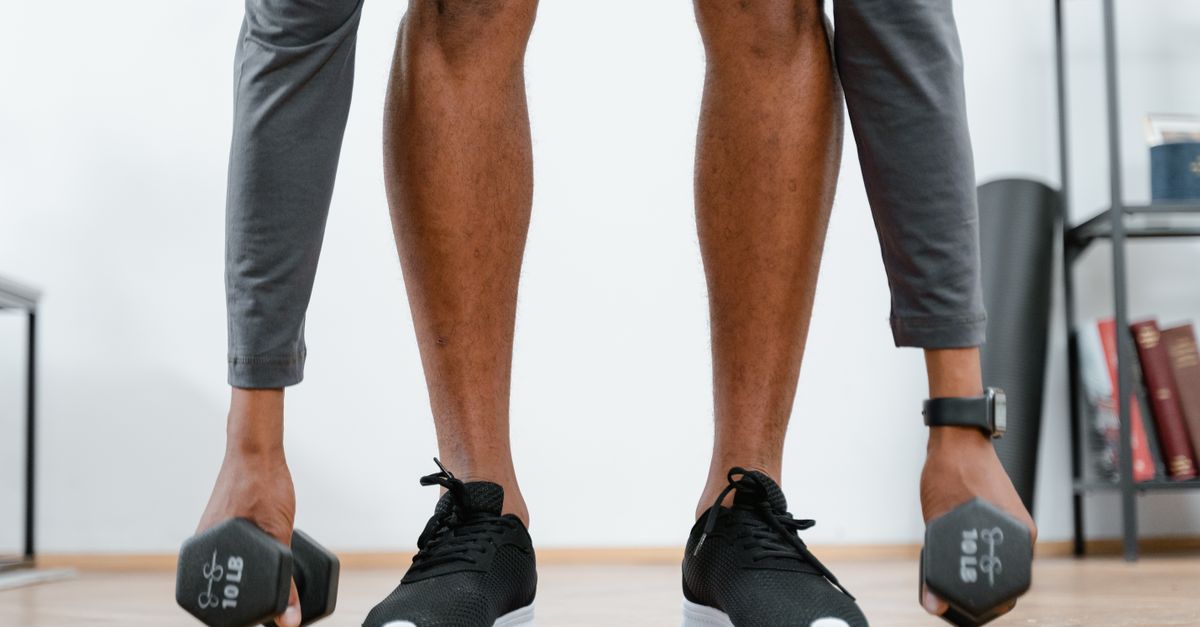
Strength training—often called resistance training—involves working your muscles against an opposing force. That force can come from free weights like dumbbells and kettlebells, specialized weight machines, elastic resistance bands, or your own body weight.
Regardless of the tool you use, the underlying stimulus is the same: your muscles contract against resistance, signaling your nervous system and muscle fibers to adapt to the physical demand.
Beginners often assume they must lift heavy iron barbells right away to see benefits. In reality, your muscles respond to tension, not the specific brand or style of equipment. A well-executed bodyweight squat or a row performed with a simple resistance band provides the necessary mechanical tension to build baseline strength if the exercise challenges you appropriately.
It is also worth noting that strength training serves a distinct purpose alongside aerobic exercise. The WHO guidelines advise adults to accumulate 150 to 300 minutes of moderate-intensity aerobic activity per week (or an equivalent combination of vigorous activity) in addition to regular muscle-strengthening work. Aerobic exercise supports your cardiovascular system and endurance, while resistance training preserves lean tissue, strengthens connective tissue, and improves functional capacity. They complement one another rather than compete.
The Essential Rules of Beginner Programming
When you start out, your primary goal is not to test your physical limits; it is to learn movement mechanics and build consistency. Jumping into high-intensity workouts designed for seasoned lifters usually leads to excessive soreness and inconsistent training.
Authoritative models provide a clear framework for how novices should begin. According to the American College of Sports Medicine (ACSM) progression guidance, novice lifters do best training the whole body two to three days per week.
┌─────────────────────────────────────────────────────────────┐
│                 NOVICE PROGRAMMING SNAPSHOT                 │
├─────────────────────┬───────────────────────────────────────┤
│ Weekly Frequency    │ 2 to 3 full-body sessions             │
│ Volume per Exercise │ 1 to 3 sets                           │
│ Repetition Range    │ 8 to 12 repetitions (general guide)   │
│ Rest Intervals      │ Long enough to regain control         │
│ Intensity / Effort  │ Controlled; finish sets with reserve  │
└─────────────────────┴───────────────────────────────────────┘
Frequency: Two to Three Days
Training your whole body across two or three nonconsecutive days (such as Monday and Thursday, or Tuesday, Thursday, and Saturday) gives your muscles and connective tissues adequate time to recover between sessions. Split routines—where you train chest one day, back the next, and legs another—often require four to six days in the gym each week. For a beginner, whole-body sessions offer higher frequency for movement practice without overwhelming your schedule.
Volume: One to Three Sets
A “repetition” (or rep) is a single complete execution of an exercise, such as lowering and pressing back up in a push-up. A “set” is a group of consecutive repetitions performed without stopping.
The ACSM indicates that novices can make meaningful strength adaptations starting with just one to three sets per exercise. Starting at the lower end of that range—one or two sets—allows your tissues to adapt to new mechanical stress without triggering severe delayed-onset muscle soreness.
Repetitions: The 8–12 Guideline
The ACSM highlights a range of 8 to 12 repetitions as a practical loading window for novices. This range sits at a sweet spot: the weight is heavy enough to challenge muscular strength, but light enough that you can perform several controlled repetitions to reinforce proper motor patterns.
Keep in mind that 8 to 12 reps is an evidence-based guideline rather than an absolute rule. You do not need to discard a set if you perform 7 or 13 reps. The true objective is performing every repetition with deliberate control, a full and comfortable range of motion, and no breakdown in your posture.
Effort Without Training to Failure
A widespread myth in fitness culture is that a set only counts if you reach complete muscular failure—the point where you physically cannot complete another repetition. For beginners, training to failure is unnecessary and increases the likelihood of technical breakdown.
Instead, select a resistance level that allows you to finish your target repetitions feeling as though you could have completed one or two more clean reps if pressed. This ensures an effective training stimulus while protecting your joints and keeping your technique consistent.
Rest Between Sets
The ACSM guidance does not mandate one rigid rest interval for every beginner. In practice, you should rest long enough to catch your breath, let muscular fatigue clear, and feel confident that you can perform the next set with stable form. For most novice movements, this typically means taking roughly one to two minutes between sets, though complex movements or warmer environments may call for slightly longer recovery.
Fundamental Movement Patterns
Instead of thinking about individual muscles like biceps, calves, or abs, organize your training around foundational movement patterns. Training basic movements ensures balanced physical development and mirrors activities you perform in everyday life.
The exercises below represent practical, illustrative options to target these patterns. They are not official prescriptions from public health guidelines, but coaching examples designed to meet you at your current strength level.
MOVEMENT PATTERN       BEGINNER REGRESSION            STANDARD PROGRESSION
───────────────────────────────────────────────────────────────────────────
Squat                  Chair Squat (Sit-to-Stand)    Goblet Squat (Dumbbell)
Hip Hinge              Floor Glute Bridge            Romanian Deadlift
Upper-Body Push        Wall or Incline Push-Up       Floor Push-Up
Upper-Body Pull        Seated Resistance-Band Row    Dumbbell Bent-Over Row
Trunk Stability        Dead Bug or Bird Dog          Front Plank
1. The Squat (Knee-Dominant Lower Body)
The squat trains your quadriceps, glutes, and adductors while demanding stability through your ankles and core.
- Standard Option: The goblet squat, holding a light dumbbell or kettlebell against your chest. Stand with your feet roughly shoulder-width apart, sit your hips down and back as if sitting into a low chair, keep your heels planted, and drive through the floor to return to standing.
- Easier Variation (Regression): The chair squat (or sit-to-stand). Stand in front of a sturdy chair, lower your hips under control until you lightly touch the seat, pause briefly without collapsing, and stand back up. This teaches hip control and knee alignment while removing the fear of falling backward.
2. The Hip Hinge (Hip-Dominant Lower Body)
Where a squat focuses on bending at both the knees and hips, a hinge emphasizes folding at the hips with minimal knee bend. This pattern targets the posterior chain: your glutes, hamstrings, and lower back muscles.
- Standard Option: The dumbbell Romanian deadlift. Holding light weights in front of your thighs, soften your knees slightly, push your hips directly behind you, and slide the weights down your thighs while keeping your back flat. Reverse the movement by driving your hips forward.
- Easier Variation (Regression): The floor glute bridge. Lie on your back with knees bent and feet flat on the floor. Press through your heels to raise your hips until your thighs and torso form a straight line, squeeze your glutes at the top, and lower down under control. This builds posterior strength without placing shearing stress on the spine.
3. The Push (Upper Body)
Pushing movements develop strength through the chest, front shoulders, and triceps.
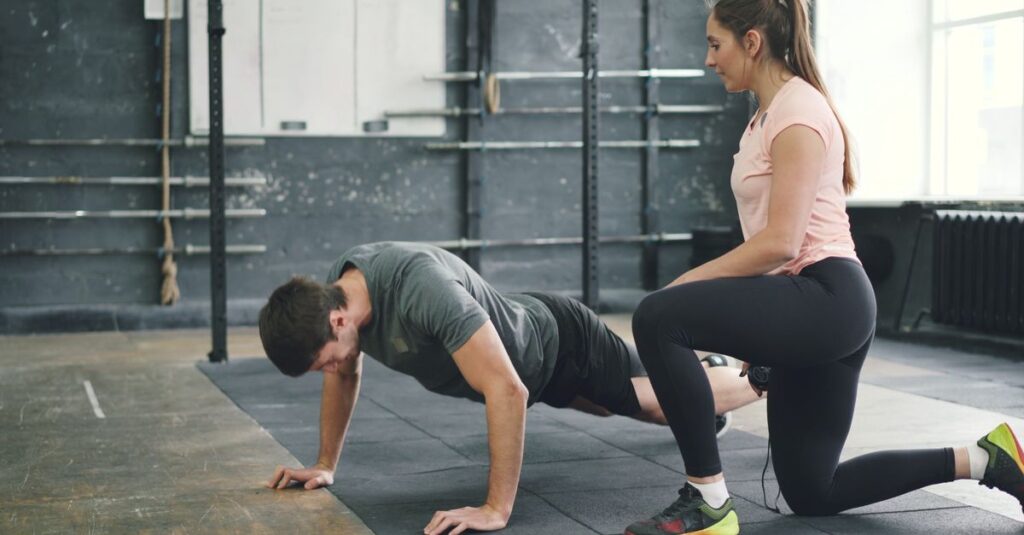
- Standard Option: Standard push-up from the floor. Keep your body in a rigid plank, lower your chest toward the floor with your elbows tracking at roughly a 45-degree angle from your ribs, and push back up without letting your lower back sag.
- Easier Variation (Regression): Wall push-ups or incline push-ups on a sturdy kitchen counter or bench. Elevating your hands significantly reduces the percentage of your body weight you have to lift, allowing you to master shoulder positioning and trunk tightness before moving to the floor.
4. The Pull (Upper Body)
Pulling exercises target the upper and middle back, rear shoulders, and biceps. They are vital for counterbalancing everyday forward-slouching postures.
- Standard Option: One-arm dumbbell row or bent-over row. Support one hand on a bench, hinge at the waist, and pull a dumbbell upward toward your hip pocket, leading with your elbow.
- Easier Variation (Regression): Seated or standing resistance-band row. Anchor a resistance band securely around a fixed post or loop it around your feet while seated with straight legs. Grasp the handles, sit tall, pull the band toward your lower ribs, squeeze your shoulder blades together, and slowly return to the start.
5. Trunk Stability (The Core)
The muscles surrounding your spine work primarily to transfer force and resist unwanted movement, rather than repeatedly crunching forward.
- Practical Options: The dead bug or bird dog. In a dead bug, you lie on your back with arms reaching toward the ceiling and knees bent at 90 degrees. Slowly extend your opposite arm and leg away from each other while keeping your lower back flush against the floor. This teaches abdominal bracing and pelvic control while your limbs are in motion.
A Sample Two-Day Starter Routine
Below is an example of how to combine these movements into a coherent, balanced session. This template is an educational illustration rather than an individualized training plan.
Perform this routine on two nonconsecutive days each week (for example, Tuesday and Friday).
EXERCISE                    SETS      REPETITIONS      REST INTERVAL
────────────────────────────────────────────────────────────────────────
1. Chair Squat or Goblet    2         8–10 reps        60–90 seconds
2. Incline or Wall Push-Up  2         8–10 reps        60–90 seconds
3. Glute Bridge             2         10–12 reps       60–90 seconds
4. Resistance-Band Row      2         10–12 reps       60–90 seconds
5. Dead Bug                 2         6–8 reps per side 60 seconds
How to Run the Session:
- Warm-Up: Spend three to five minutes walking at a comfortable pace and performing gentle bodyweight movements (like arm circles, hip openers, and shallow bodyweight squats) to increase joint mobility and raise your core temperature.
- Execution: Complete each set with smooth tempo. Take roughly two seconds to lower the weight or your body, pause for a split second, and take one to two seconds to lift. Avoid bouncing or using momentum.
- Rest: Pause between sets until your breathing settles and your muscles feel recovered enough to maintain strict form on the next attempt.
- Cool-Down: Conclude with a few minutes of relaxed walking and deep breathing to help your body transition out of the workout.
Progressive Overload: When and How to Advance
To continue getting stronger, you must eventually increase the demands placed on your body. This concept is called progressive overload. However, many beginners make the error of advancing too fast, adding weight before their movement control is truly established.
According to the WHO 2020 guidelines, adults who have been inactive should start with small amounts of physical activity and gradually build up frequency, intensity, and duration over time. Consistency must come before progression. Keep your starting routine consistent for several weeks before changing exercises or making major jumps in load.
                STEADY PROGRESSION FLOWCHART

   Master Technique (Full, comfortable range of motion)
                        │
                        ▼
   Build Repetitions (Reach top of target range, e.g., 12 reps)
                        │
                        ▼
   Add Resistance Gradually (ACSM 2–10% guideline)
                        │
                        ▼
   Reset Repetitions to Lower End (e.g., 8 reps) and Repeat
The ACSM Progression Guideline
When you are ready to make an exercise more challenging, how much weight should you add? The ACSM progression models describe a practical rule of thumb: when you can comfortably exceed your target repetition limit by one or two reps on a given exercise, consider increasing the load by approximately 2% to 10%.
- Lower end (2% to 5%): Best suited for smaller-muscle exercises or upper-body movements, such as overhead presses, bicep curls, or dumbbell rows.
- Higher end (5% to 10%): Practical for larger-muscle exercises involving the lower body, such as squats or deadlifts, where more total muscle mass is working.
Treat this guideline as an available option rather than a mandatory jump. If your gym only has dumbbells that increase in five-pound increments (which might represent a 20% jump if you are moving from 10 to 15 pounds), you can progress by adding an extra set, slowing down your movement speed, or adding one or two repetitions per set before reaching for the heavier weights.
Six Mistakes That Derail Beginners
- Confusing Soreness With Progress: Waking up unable to straighten your arms or walk down stairs is a sign of excessive tissue stress, not superior training. Adaptation occurs through repeatable, moderate stress, not periodic exhaustion.
- Training Too Frequently: More is not automatically better. Muscles do not grow or adapt during the workout itself; they adapt during the recovery window between sessions. Lifting hard every single day removes the recovery period your body needs to rebuild tissue.
- Copying Advanced Bodybuilder Splits: A six-day split routine targeting individual body parts works well for competitive athletes with years of conditioning. For beginners, it spreads training volume too thin and requires excessive time commitments that rarely last.
- Increasing Weight Prematurely: Adding resistance while cutting your range of motion short (for example, squatting only a few inches downward to handle more weight) places unnecessary strain on your joints while reducing muscle activation. Own the full range of motion first.
- Ignoring Sharp Discomfort: Normal strength training creates a dull muscular burn during a hard set and mild tenderness the next day. If an exercise causes sharp, localized, or worsening joint pain, stop the movement immediately. Modify your range of motion, change your stance, regress to an easier variation, or eliminate the exercise.
- Neglecting Trunk and Posterior Muscles: It is common for beginners to overemphasize the “mirror muscles”—the chest, shoulders, and quads—while skipping rowing movements, hinges, and trunk work. Balanced programming protects joint health and posture.
Safety, Individual Differences, and Medical Clearance
Strength training is an adaptable practice, but individual baselines differ substantially. Factors such as training history, age, structural injuries, and chronic health issues dictate what movements are safe and effective for you.
- Chronic Health Conditions: If you live with cardiovascular disease, diabetes, arthritis, or another chronic condition, consult your physician before starting a resistance routine to determine which exercises and intensities are appropriate.
- Sedentary Adults: The CDC recommends that individuals who have been inactive, individuals with disabilities, and individuals with overweight consult a healthcare provider before beginning vigorous-intensity exercise programs.
- Older Adults: The WHO physical activity guidelines highlight that adults aged 65 and older should incorporate varied multicomponent physical activity that emphasizes functional balance and strength training on three or more days a week to enhance functional capacity and prevent falls.
Educational Note: This article is intended for informational and educational purposes only and should not be interpreted as medical advice, clinical diagnosis, or individualized exercise prescription. Always listen to your body and seek guidance from a qualified professional if you experience persistent pain or discomfort.
Frequently Asked Questions
Can you build strength using only bodyweight exercises?
Yes. Your muscles adapt to tension regardless of the source. By altering leverage, adjusting hand or foot placement, and increasing the difficulty of a movement (such as moving from a wall push-up to an incline push-up), you can generate sufficient resistance to build meaningful baseline strength without weights.
How quickly should I expect to see results?
Neurological adaptations occur first. During the initial four to six weeks of a new routine, you will likely notice that movements feel more coordinated, stable, and effortless before you notice measurable changes in muscle size. Visible changes in body composition depend heavily on nutrition, genetics, recovery, and consistent adherence over months rather than days.
What should I do if my joints ache after a session?
Differentiate between muscle soreness and joint irritation. Mild, diffuse tenderness in the belly of a muscle 24 to 48 hours after training is common. Aching, sharp pain, or swelling directly within a joint (such as the front of the knee or the top of the shoulder) usually signals technical error, an excessively heavy load, or an exercise that does not fit your current joint mechanics. Reduce the weight, check your form, or switch to an easier variation.
Your Next Step
Do not wait for the perfect schedule or an expensive gym membership to begin. Select two days this upcoming week, block out 30 minutes on your calendar for each session, and test the five basic movements using your body weight or light household items. Focus entirely on moving smoothly, mastering the technique, and completing the workout with energy left over.